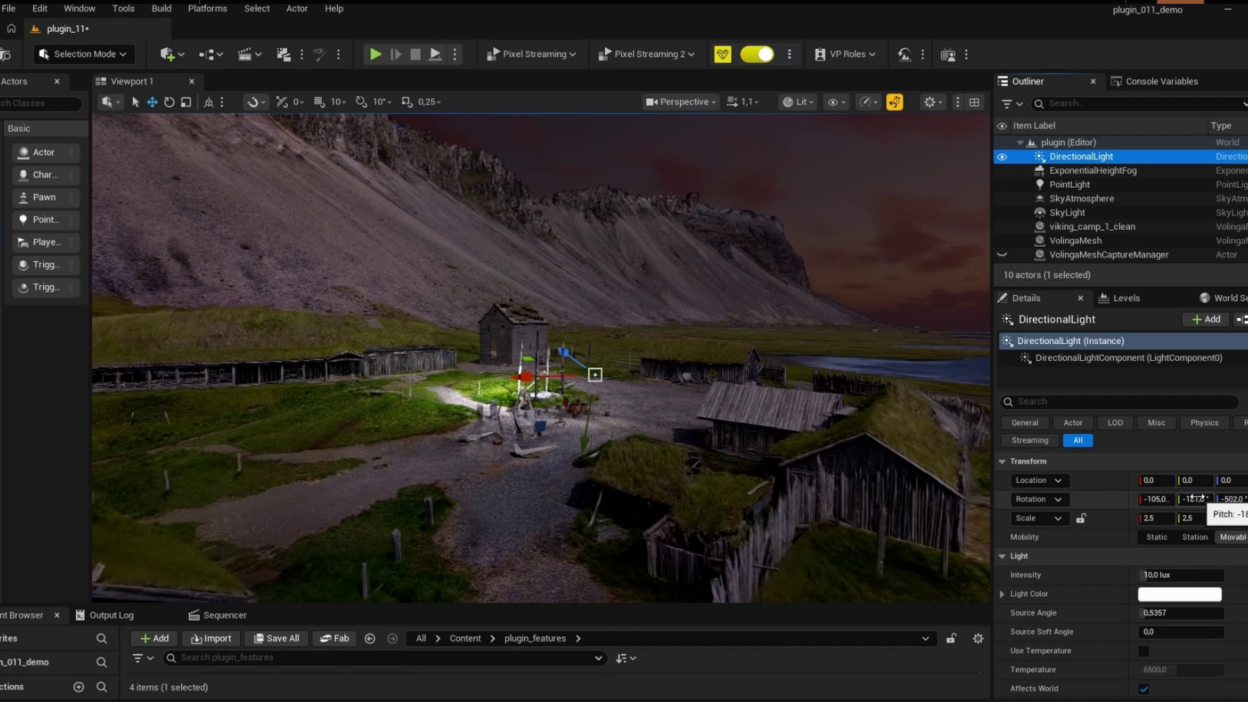
We’re releasing Volinga Suite 0.5 and Volinga Plugin 0.11, bringing a major set of updates across the Volinga workflow. This release expands how artists can train, prepare, light, and render Gaussian Splat content, with new capabilities for PBR workflows, normals, HDR, color management, Proxy Meshes, 4DGS, Unreal Engine performance, and more.
The latest releases are designed to give you greater control from capture through final pixel.
Volinga Plugin 0.11.0: More control inside Unreal Engine
Volinga Plugin 0.11.0 introduces new tools for lighting, color, asset management, and performance alongside a redesigned licensing experience.
A simpler licensing experience
Volinga’s new online licensing system makes it easier to access and manage Plugin licenses. Online licenses for both Pro and Basic are now linked to your Volinga account rather than a specific machine hardware hash, giving users more flexibility when working across different systems.
Per-model normals
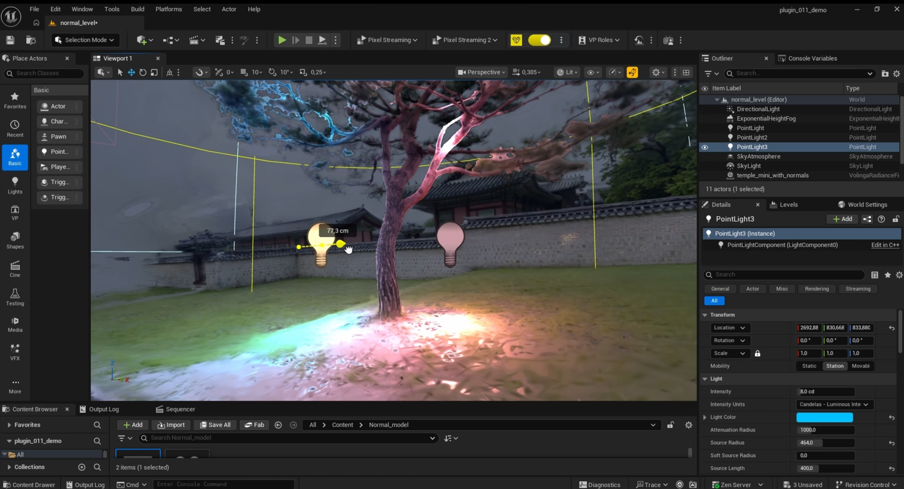
Artists now have more granular control over normals at the individual model level, allowing different assets within the same scene to use different approaches. This becomes especially powerful when combined with the new Proxy Mesh workflow, giving artists greater control over how individual Gaussian Splat assets interact with lighting and scene geometry.
A completely reworked Proxy Mesh workflow
Proxy Meshes have received a major update in Plugin 0.11.0. The Proxy Mesh normal method has moved from a global scene setting to the individual Volinga Mesh Actor, allowing different assets within the same Unreal scene to use independent Proxy Mesh settings.
The new workflow also introduces:
- The ability to enable or disable Proxy Mesh functionality per Volinga Mesh
- Material support directly on Proxy Mesh geometry
- Per-actor control over whether a Gaussian Splat is affected by the Proxy Mesh
Together, these changes make Proxy Mesh workflows significantly more flexible when building complex scenes.
Embedded normals
Plugin 0.11.0 also adds support for NVOL models trained with embedded normals. Rather than generating normals separately after bringing an asset into Unreal Engine, models containing embedded normals can now use their native normal information directly through Volinga Plugin. This creates a more direct path between training and downstream lighting and rendering workflows.
Better color workflows
This release also expands control over how Gaussian Splat content is interpreted and displayed inside Unreal Engine.
A new PLY Color Space selector allows artists to specify how imported PLY data should be interpreted, with support for:
- S-Log3
- ACES2065-1
- ACEScg
- sRGB
Plugin 0.11.0 also improves overall color accuracy, addressing a rendering issue that could introduce a blue tint into Gaussian Splat content. Auto Exposure and Eye Adaptation controls have also been added directly to the Volinga Tools menu, helping artists maintain the intended appearance of their captured content without Unreal Engine automatically modifying exposure.
And much more
Plugin 0.11.0 also includes a range of performance and workflow improvements, including:
- Asynchronous NVOL loading, preventing asset processing from blocking the Unreal Engine main thread
- Full DLSS and TAA support
- Improved nDisplay integration and stability
- General Unreal Engine 5.8 stability improvements
- A fix for an nDisplay VRAM memory leak when freezing the viewport
- Updated Volinga branding throughout the Plugin interface
Volinga Suite 0.5.0: More powerful training and asset creation
Volinga Suite 0.5.0 expands the tools available for creating and preparing Gaussian Splat assets, with major additions across training, PBR, HDR, masking, and 4DGS workflows.
Introducing IGS+
Suite 0.5.0 adds the new IGS+ training method, giving creators another option for generating Gaussian Splat models inside Volinga Suite.
PBR channels and embedded material training
This release also introduces support for PBR channels and embedded material training. Together, these additions expand the information that can be incorporated during training and create a stronger foundation for downstream material, lighting, and rendering workflows.
16-bit HDR for 4DGS
Dynamic Gaussian Splat workflows also receive an important upgrade with 16-bit HDR support for 4DGS projects. Combined with new animation and motion-related parameters, Suite 0.5.0 gives creators greater flexibility when working with dynamic captured content.
Smarter masking
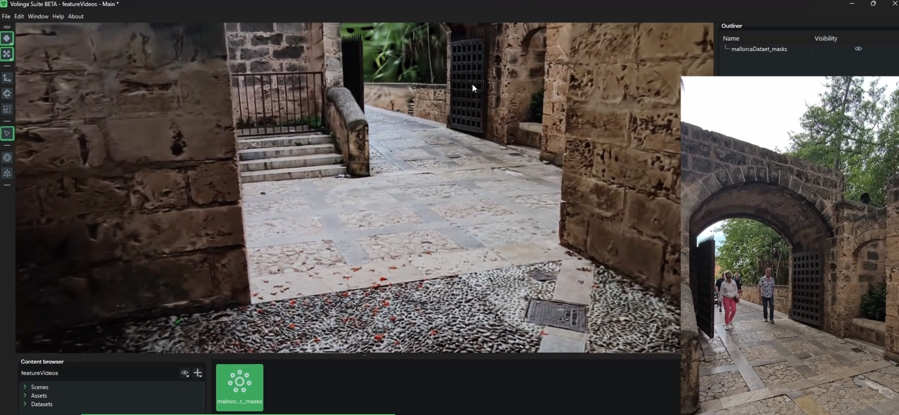
Suite 0.5.0 introduces both automatic and custom masking tools. Users can now automatically generate human and sky masks, while still having the ability to bring in custom masks when more precise control is needed.
Multi-video training and improved 4DGS workflows
The release also adds multi-video training, alongside better progress information during 4DGS conversion and training. Additional improvements include more detailed job progress reporting, improved loading of large models, and better asynchronous model loading.
A more connected workflow from training to final pixel
Taken together, Suite 0.5.0 and Plugin 0.11.0 represent a significant evolution of the Volinga workflow.
Suite gives creators more control over how assets are trained and prepared. Plugin gives artists more control over how those assets behave, look, and perform inside Unreal Engine. From PBR and HDR to embedded normals, Proxy Meshes, color management, 4DGS, and Unreal Engine performance, this release is focused on giving artists more of the tools they need to bring real-world capture into production.
Volinga Suite 0.5.0 and Volinga Plugin 0.11.0 are available now